
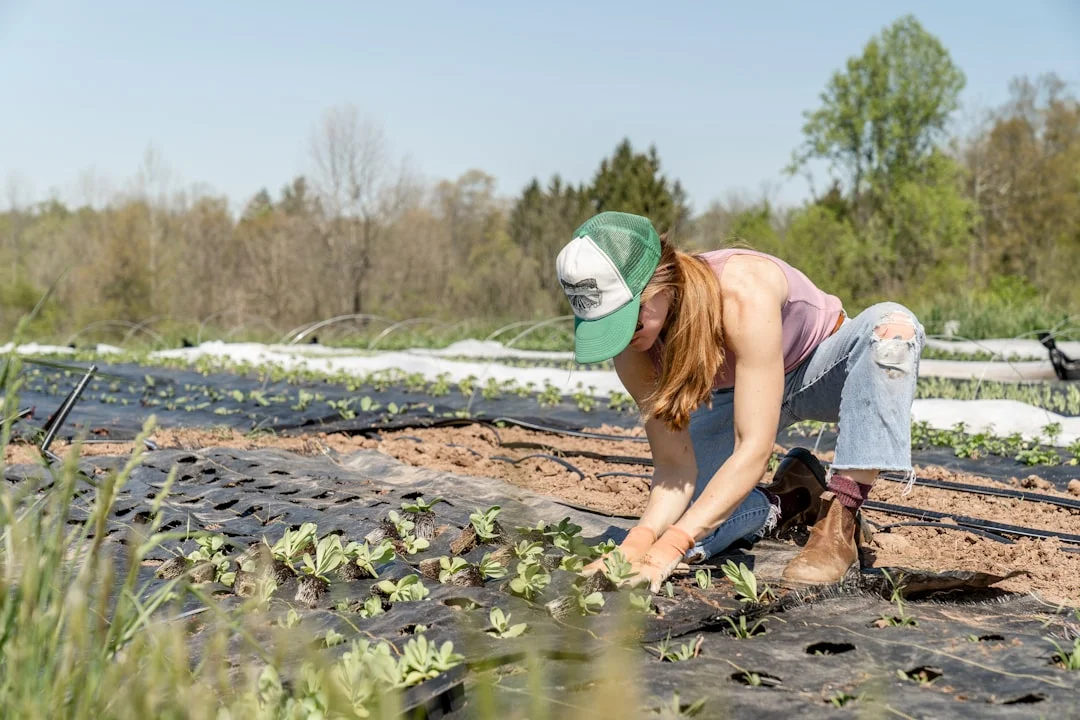
How Does Women's Leadership Improve Agricultural Extension and Food Security?
Discover how prioritizing women's leadership in agricultural extension services, particularly through models like Good Nature Agro in Zambia, effectively closes the gender gap, boosts farmer adoption of sustainable practices, and improves community-wide food security and nutrition.
The global challenge of food security requires sustainable farming solutions, yet many conventional agricultural extension services fail to effectively reach the majority of smallholder farmers. In Sub-Saharan Africa, women perform up to 80% of agricultural labor, but they receive less than 10% of extension services. This gap in access significantly hinders productivity and nutritional outcomes. Good Nature Agro (GNA) is addressing this disparity by prioritizing the recruitment and training of female agricultural extension agents in countries like Zambia. This model demonstrates how investing in women's leadership transforms traditional farming practices and improves community-wide resilience.
Key Takeaways on Women's Leadership
- Agricultural extension services are significantly more effective when delivered by female officers who understand and address cultural barriers specific to women farmers.
- The ability of women extension officers to build trust with female farmers directly improves the adoption rate of new technologies and sustainable practices.
- Empowering women leaders shifts agricultural focus from purely commercial returns to a more holistic approach incorporating nutritional outcomes and household food security.
- Financial inclusion through digital payments and shared account registration provides women greater control over their income, which strengthens their leadership position and household stability.
- The GNA model demonstrates that sustainable agriculture requires addressing social constraints like land ownership and financial control in parallel with technical farming knowledge.
The Traditional Gender Gap in Agricultural Extension
Historically, agricultural extension services in many developing regions, particularly in Sub-Saharan Africa, have been male-dominated and primarily focused on cash crops and large-scale farming. This model often neglects the specific needs of smallholder women farmers, who typically cultivate food crops and manage household nutrition. This results in a significant "knowledge gap" where women lack access to critical information, technology, and resources. Research suggests closing this gender gap could increase agricultural productivity by 20% to 30%.
Why Women Extension Officers are More Effective
The primary advantage of female extension officers lies in their ability to bridge communication barriers. Socio-cultural norms often prevent male extension officers from interacting directly with women farmers, especially in rural settings. Female officers, however, can build rapport and conduct training in a safe, culturally appropriate environment. This trust facilitates a more open exchange of knowledge, allowing for discussions on sensitive topics like family nutrition and resource allocation within the household.
In Sub-Saharan Africa, women perform up to 80% of agricultural labor but receive less than 10% of extension services. Closing this gender gap could increase agricultural productivity by 20% to 30%. Programs like Good Nature Agro have demonstrated significant impact, increasing farmer income by 300% and expanding services to over 20,000 households.
The GNA Model and Addressing the Adoption Gap
Good Nature Agro (GNA), based in Zambia and Malawi, recognized that conventional extension models were failing to unlock the potential of female smallholder farmers. GNA designed its model to place women at the center of both its training and leadership structure. This approach involves a "high-touch model" where female extension officers—often called "Grower Services Managers"—work directly with women farmers in their communities. What many articles miss is that the challenge isn't just access to information; it's the *adoption rate* of new practices. When information is delivered by an extension officer who understands the specific constraints of women farmers—such as limited control over land, low literacy levels, and time constraints from reproductive roles—the advice becomes practical. This localized and gender-sensitive approach ensures that new methods are successfully integrated into the existing household and agricultural system, rather than just being presented theoretically.
Sustainable Practices and Nutritional Outcomes
GNA's focus on legume production (such as soybeans, groundnuts, and cowpeas) directly impacts the nutritional well-being of smallholder families. Legumes are high in protein, essential minerals, and micronutrients. By promoting their cultivation and providing market access, GNA helps diversify household diets away from reliance on staple crops like maize. This diversification is a key strategy for reducing malnutrition, especially among women and children in rural communities. The GNA model highlights a shift from single-crop focus to diversified, climate-smart agriculture. The extension officers are trained to emphasize practices such as conservation farming, crop rotation, and soil health management. These methods improve long-term productivity and reduce reliance on expensive chemical inputs.
The Role of Digital Financial Inclusion
GNA integrates digital financial literacy and payment systems into its extension program. By co-registering spouses and offering pre-harvest payments, GNA ensures women have direct access to and visibility of financial resources. This addresses the common barrier where men control the income from cash crops, even when women do the majority of the labor. Access to digital payment systems also reduces the security risks associated with handling cash in remote areas.
Empowerment and Overcoming Resource Barriers
Women in agriculture face multiple barriers beyond simple knowledge gaps. These include lack of control over land ownership, limited access to credit facilities, and heavy workloads balancing farming and household responsibilities. GNA's leadership training not only provides technical skills but also a support structure for women to take more control over resources and decision-making processes within their households and cooperatives. When women become leaders within agricultural cooperatives and extension programs, they gain influence over key resource allocations. This includes determining which seeds to purchase, which crops to prioritize for food security, and how to allocate household income. The GNA model, by promoting women leaders, empowers them to prioritize decisions that benefit household nutrition and community resilience over simple maximizing of short-term cash profits.
GNA Program Impact Snapshot (Zambia/Malawi)
undefined
| Metric | Baseline (Pre-Program) | Program Outcomes (2023-2025) | Impact Percentage Change |
|---|---|---|---|
| Farmer Households Served | 40 (2014) | >20,000 | >50,000% |
| Farmer Income Increase | Baseline | 300% of baseline income | 300% |
| Women Leadership in Coops | Low (not specified in baseline) | 45% of extension workers are women in a related project | Significant increase |
| Adoption of Climate-Smart Practices | Low (monocropping) | High adoption rates for legumes/conservation farming | N/A (Shift in practice) |
| Food Security (Household Nutrition) | Maize-dependent diets | Increased dietary diversity via legumes | N/A (Qualitative shift) |
- Does Eating Organic Food Reduce Cancer Risk?
- How Are AI and Sustainable Food Tech Changing Nutrition?
- What Caused the Recent Food Safety Testing Expansion?
- How Will AI Personalization Change Sustainable Food Production?
- The Future of Food: How Artificial Intelligence is Bridging Personalized Nutrition and Sustainable Eating
- The Future of Food: Personalized Nutrition, AI, and Sustainable Trends to Watch in 2026
- The Future of Food: Key NutriScience Trends Reshaping Health in 2026
- The Future of Food: Decoding Emerging Nutri-Science Trends for 2026
Frequently Asked Questions
What exactly is agricultural extension?
Agricultural extension refers to educational and advisory services provided to farmers to improve their knowledge, skills, and practices. These services act as a bridge between agricultural research institutions and rural smallholder farmers, aiming to increase productivity, improve sustainability, and enhance food security.
Why are women typically excluded from traditional extension services?
Traditional extension services often focus on male farmers, assuming they own the land or are the primary decision-makers, despite women performing most of the labor. This exclusion is exacerbated by cultural norms that limit interaction between male extension officers and female farmers, as well as by women's heavy workload balancing domestic chores and farm work.
How does GNA measure the impact of its women’s leadership programs?
GNA measures impact through metrics such as increased farmer income, adoption rates of specific sustainable farming techniques (like conservation agriculture), and increased yield per hectare. The program also assesses qualitative outcomes like improved household nutrition through dietary diversification and enhanced decision-making power for women within their cooperatives.
What role does technology play in supporting women in agricultural extension?
Technology, specifically digital tools and mobile banking platforms, helps overcome traditional barriers. By providing access to digital payments and financial literacy training, organizations like GNA can give women direct control over their income, which might otherwise be managed by men. This enables greater personal investment in farm improvements and household needs.
