
How Will Precision Fermentation and Molecular Farming Change Food?
Explore how precision fermentation and molecular farming are revolutionizing food production. Learn about these sustainable technologies, their impact on alternative proteins, and how they differ from traditional agriculture to create a more resilient food system.
Precision fermentation and molecular farming represent a fundamental shift in food production, moving beyond traditional agriculture to create specific proteins, fats, and ingredients with significantly reduced environmental impact. These technologies leverage microorganisms or plants to produce high-value nutritional components, offering scalable solutions to resource scarcity and supply chain vulnerabilities in a rapidly changing climate. By separating nutritional outputs from agricultural inputs, these methods redefine efficiency and sustainability for the global food system. As of early 2026, breakthroughs in biomanufacturing and plant-based production are accelerating the market entry of these new ingredients, promising to address consumer demand for sustainable and ethically sourced nutrition.
Key Takeaways on Food Technology
- Precision fermentation and molecular farming produce specific food ingredients with significantly lower environmental impacts than traditional methods.
- These technologies create "cell factories" (microorganisms) or "plant factories" (engineered plants) to produce precise proteins, fats, and vitamins.
- Initial market adoption is focused on replacing dairy and egg proteins, offering products with identical function and taste but without animal inputs.
- The primary challenge for wider adoption lies in achieving streamlined regulatory approval and increasing consumer education to overcome skepticism regarding novel food technologies.
What is Precision Fermentation?
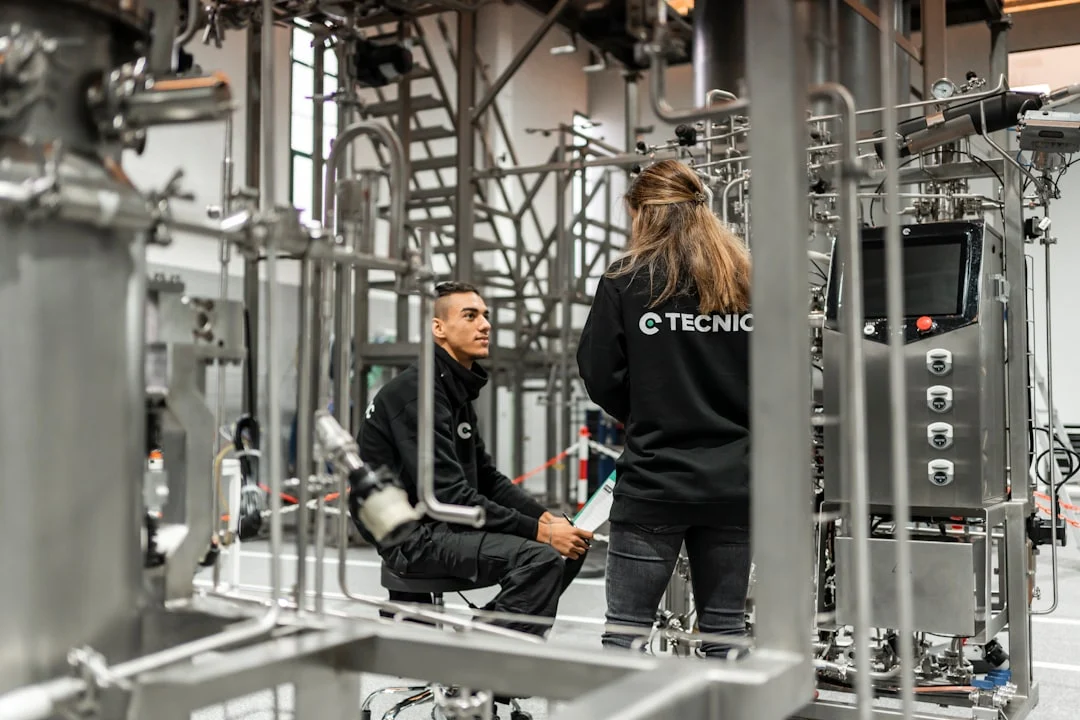
Precision fermentation utilizes microorganisms—like yeast, bacteria, or fungi—as "cell factories" to produce specific proteins, fats, or ingredients. Unlike traditional fermentation used for bread or beer, precision fermentation programs the microorganism's DNA to produce a precise compound, such as a dairy whey protein, egg white protein, or specific vitamin. This process occurs within steel bioreactors, allowing for tightly controlled production environments that are highly efficient and predictable. The resulting ingredient is chemically identical to its conventional counterpart but produced without animals.
What is Molecular Farming?
Molecular farming involves engineering plants to produce high-value molecules or proteins. In this process, a specific gene sequence is introduced into a plant's genetic code, instructing it to synthesize a desired compound as it grows. The compound, which could be anything from a specific enzyme to a complex human protein, is then harvested from the plant material. This approach leverages the scalability of agriculture while directing the plant's natural machinery toward a precise nutritional output, minimizing the land, water, and energy required for traditional production methods.
Precision fermentation and molecular farming offer high resource efficiency compared to traditional agriculture, which has high land and water usage, especially for animal farming. These new methods significantly reduce the environmental footprint and greenhouse gas emissions associated with conventional food production.
How Do These Methods Improve Sustainability?
These technologies drastically reduce the environmental footprint compared to conventional food systems. Precision fermentation requires significantly less land and water than animal farming. Molecular farming can produce proteins in plants that are typically only available from animals, reducing the need for livestock. By decoupling production from weather patterns and agricultural seasonality, they also offer greater supply chain resilience. This efficiency addresses issues of resource depletion and greenhouse gas emissions associated with large-scale conventional agriculture.
How Do They Differ from Cellular Agriculture (Cultivated Meat)?
What many articles miss is the distinction between precision fermentation and cultivated meat. Precision fermentation focuses on producing specific ingredients, like proteins or fats, which are then used in final food products. Cultivated meat, by contrast, involves growing actual animal muscle and fat cells outside of an animal to create a whole cut of meat. While both use bioreactors, precision fermentation creates functional ingredients for use in a variety of products, while cellular agriculture aims to replicate the structure of meat itself.
Market Impact on Dairy and Nutritional Customization
The most immediate market impact of precision fermentation is in the alternative dairy space. Companies are producing animal-free whey and casein proteins that are chemically identical to those found in cow's milk. These ingredients offer superior texture, flavor, and functionality for alternative dairy products compared to plant-based proteins like soy or almond. This allows for a new generation of non-dairy cheese and yogurt products that perform identically to their traditional counterparts. Precision fermentation and molecular farming offer unparalleled opportunities for nutritional customization. It allows for the production of specific functional ingredients, such as vitamins, probiotics, or rare compounds, with high purity. By precisely controlling the microorganism or plant's output, producers can create foods tailored to specific dietary needs or health goals, such as producing ingredients without common allergens. This level of control surpasses the capabilities of traditional agriculture, where nutritional composition varies based on soil and climate.
Economic Implications and Regulatory Hurdles
The rise of precision fermentation and molecular farming will likely impact traditional agriculture through increased competition for certain products, particularly milk proteins and high-value nutritional ingredients. This may lead to changes in agricultural land use, potentially reducing the need for pastureland for dairy cows. However, it also presents opportunities for farmers to participate in molecular farming, diversifying their crops to produce high-value protein sources rather than bulk commodities. This shift requires strategic planning and investment in new agricultural models. A key challenge for these technologies is achieving regulatory approval and consumer acceptance. In the US, ingredients created via precision fermentation are generally recognized as safe (GRAS) by the FDA, provided they meet specific safety criteria. In Europe, the process involves novel food approval by the European Food Safety Authority (EFSA), which can be lengthy. For consumers, clarity on whether these products contain "GMOs" (genetically modified organisms) is vital for acceptance, as many consumers are wary of synthetic biology, even if the end product is chemically identical to the natural version.
Key Applications in Health and Wellness and Market Scaling
Molecular farming is seeing significant development in non-food applications, particularly in pharmaceuticals and health supplements. For instance, plants can be engineered to produce human proteins like insulin or specific antibodies. In the nutritional space, this technology can be used to produce rare antioxidants or bioactive peptides more efficiently than extracting them from natural sources. This integration of food science and pharmaceutical methods creates a new category of functional foods. Investment in precision fermentation and molecular farming has surged in recent years. This capital injection is being used to build large-scale production facilities and refine biomanufacturing processes to reduce costs. As production scales up, cost-competitiveness against traditional agriculture increases. As of early 2026, several companies have launched products, including animal-free dairy ice cream and proteins for supplements, demonstrating rapid market adoption in high-income countries.
Comparison of Food Production Methods
undefined
| Feature | Precision Fermentation | Molecular Farming | Traditional Agriculture |
|---|---|---|---|
| Primary Output | Specific proteins, fats, enzymes, vitamins | Specific proteins and ingredients | Whole crops, meat, and dairy products |
| Production Method | Microorganism in bioreactor | Engineered plant | Animals or field crops |
| Resource Efficiency | High; minimal land/water use | High; leverages plant efficiency | Low; high land/water use for animal farming |
| Scalability | High; easily scaled by increasing bioreactor capacity | High; scalable based on crop yields | Variable; dependent on land, weather, and seasonality |
| Environmental Impact | Low; reduced greenhouse gas emissions | Low to moderate; reduced land/water needs | High; significant greenhouse gas and resource use |
| Product Purity | Very high; precise control over output | High; targeted compound production | Variable; influenced by environment and processing |
- Beyond Yield: How Tech and Policy Solutions Are Redefining Sustainable Food Security
- The AI Revolution: How Technology Is Personalizing Nutrition and Securing Sustainable Food Systems
- How Is AI Driving Breakthroughs in Precision Nutrition?
- How Does AI Precision Nutrition Work?
- Why Are Food Tech Investors Prioritizing Profitability Over Growth?
- Why Are Investors Shifting from Wellness to Precision Nutrition?
- The Future of Eating: AI, Microbiome Science, and Truly Personalized Diets
- Why Food Systems Are Crucial for Climate Change Targets
Frequently Asked Questions (FAQ)
Are precision fermentation products safe to eat?
Yes, ingredients produced by precision fermentation undergo rigorous regulatory review by agencies like the FDA in the US before market entry. These products are chemically identical to traditional ingredients and must meet specific safety standards.
Are products from molecular farming considered GMOs?
Yes, molecular farming relies on genetic engineering to instruct a plant to produce a specific compound. In many jurisdictions, these plants or their derived ingredients would be classified as genetically modified organisms (GMOs) due to the introduction of foreign DNA.
How do these technologies benefit food allergies?
These methods can be used to produce essential nutrients without common allergens. For example, precision fermentation can create proteins that are identical to milk proteins but without the lactose or other allergenic components, offering new options for those with specific dietary restrictions.
Will precision fermentation replace all traditional agriculture?
No, these technologies are expected to complement traditional agriculture, not replace it entirely. They primarily focus on high-value proteins and ingredients, while traditional agriculture will continue to be essential for bulk carbohydrates like grains and produce.
